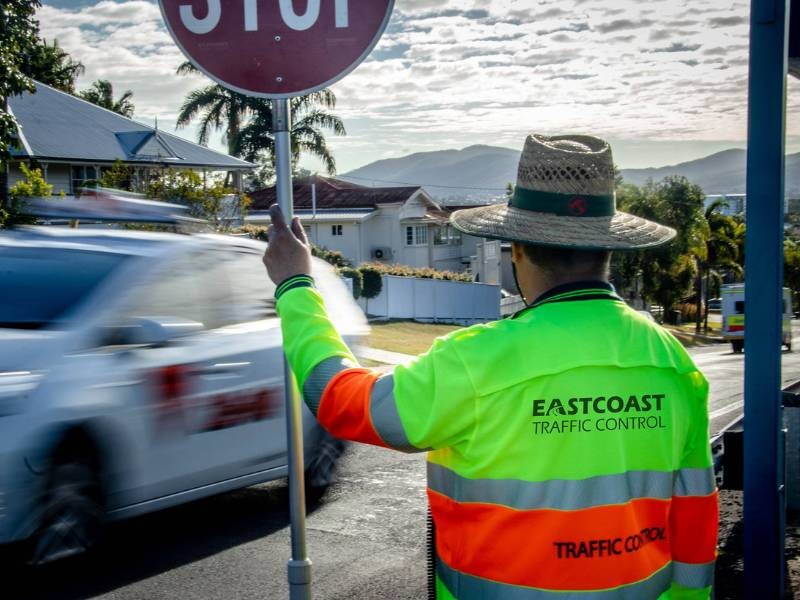
Most people only see traffic controllers for a moment. A flash of high-vis, a raised hand, a quick wave with the Stop/Slow bat. Then it’s on with their day.
What they don’t see is the mental intensity behind the job — the constant scanning, the pressure to stay alert, and the responsibility of protecting both the crew behind them and the strangers driving past them.
At East Coast Traffic Control, we know that traffic control isn’t just physically demanding — it’s mentally exhausting, especially when your workplace is a live road with unpredictable drivers, variable weather and split-second decisions to make.
Here’s what really goes on inside the high-vis zone.
A job that demands constant focus
When you’re standing metres from live traffic, you can’t zone out — not even for a second.
Traffic controllers are trained to:
- Scan vehicles for speed, behaviour and direction changes
- Anticipate risks based on noise, movement or driver hesitation
- Read the body language of motorists — is that ute slowing down, or are they distracted?
- Monitor the worksite behind them, watching for crew, plant and movement
- Stay responsive on radio comms while managing everything else visually
That’s not just multitasking — it’s a constant state of heightened awareness.
Unpredictable drivers add pressure
Most road users do the right thing. But it only takes one distracted driver, one person speeding through a 40 zone, or one motorist ignoring the Stop sign to put lives at risk.
That’s the reality our teams face every day. And it’s mentally draining.
The job isn’t just holding a sign — it’s managing human behaviour in an uncontrolled environment. And when you’re doing that for hours at a time, in the heat or the rain, it takes a toll.
Environmental stress is real
Being on the road means being exposed — to the elements, to noise, and to unpredictability.
Think about a traffic controller’s day:
- Standing on hot bitumen in 35-degree heat
- Dodging sun glare while watching traffic patterns
- Working near heavy plant, reversing trucks, or bitumen sprayers
- Coping with wind, rain, or cold during long winter shifts
- Remaining calm when a member of the public becomes aggressive or impatient
It’s a pressure cooker environment, and it requires not just physical toughness — but emotional control and mental clarity.
The weight of responsibility
Every traffic controller carries a quiet but heavy responsibility: if something goes wrong, it’s on them to respond.
They’re the last line of defence between an oncoming car and the work crew behind them. They’re the ones who must stop a car that doesn’t see the barrier. And they’re the ones who feel it the most when things go sideways.
That kind of weight builds up. And it’s why ECTC places such a strong focus on:
- Clear communication
- Structured rest breaks
- Crew rotation on longer jobs
- Support from supervisors and Area Managers
- Respect for the people doing the work on the ground
We see the people behind the PPE
Traffic controllers aren’t just “labourers in high-vis”. They’re decision-makers, risk managers, communicators and professionals.
At ECTC, we’re proud of the mental strength our crews show day in, day out — not just to get the job done, but to do it with patience, clarity and calm under pressure.
They’re protecting everyone else. It’s time we recognise what that takes.
FAQs
Is traffic control more mentally demanding than people think?
Yes. It requires constant awareness, risk assessment, and decision-making — often in loud, busy, or stressful environments.
What risks do traffic controllers face on a daily basis?
From speeding vehicles and distracted drivers to aggressive road users and changing weather, the job carries real physical and mental risks.
How do crews cope with the mental load?
Through structured breaks, team support, training, strong communication, and the backing of experienced supervisors.
Does ECTC provide support for its traffic controllers?
Yes. We rotate crews, prioritise safety briefings, and foster a team culture that values both physical and mental wellbeing.
What’s the biggest misconception about the job?
That it’s “just holding a sign.” In reality, it’s a high-responsibility role that requires focus, skill, and constant risk awareness.