To the average driver, traffic controllers might seem like the most visible — and perhaps the most misunderstood — people on a worksite.
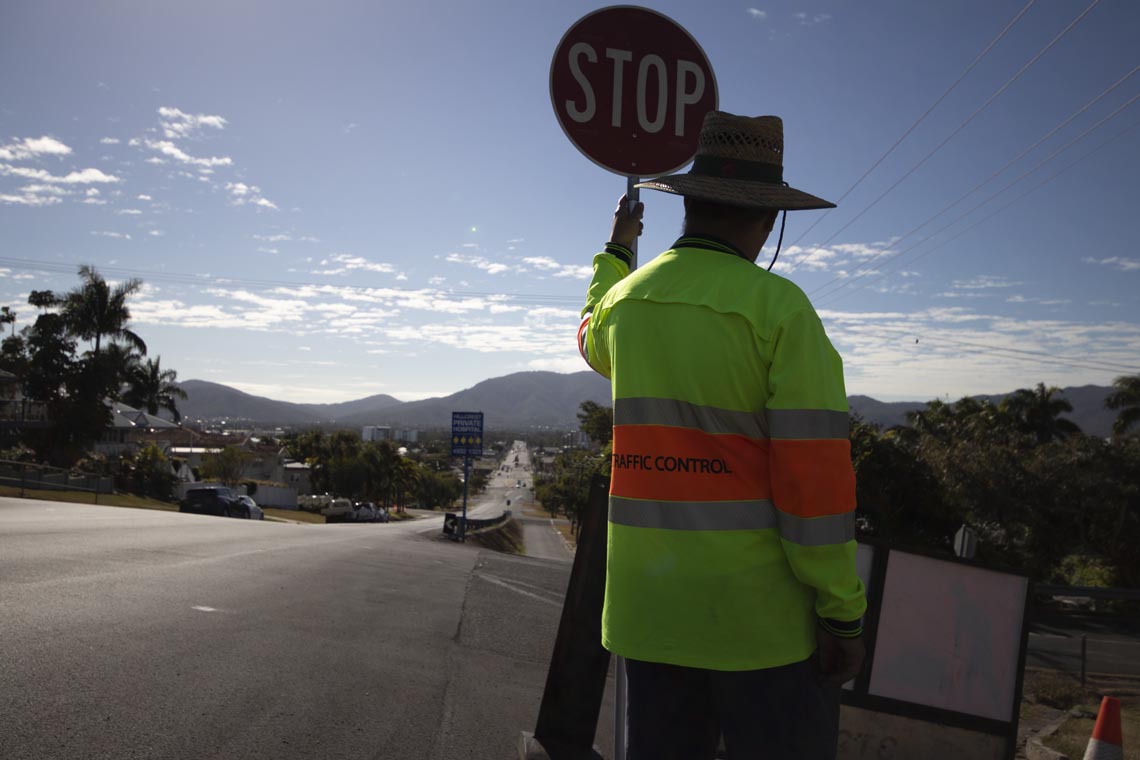
You’ll see them on the roadside, Stop/Slow bat in hand, standing still while cars stream past.
What most people don’t realise is that traffic controllers are doing far more than holding a sign. They are constantly managing risk in a live, unpredictable environment — protecting workers, guiding road users, and making real-time decisions that prevent serious harm.
At East Coast Traffic Control, we see traffic controllers for what they really are: mobile safety managers, out on the frontline.
They’re trained to read traffic — not just stop it
Good traffic control isn’t about routine. It’s about reading the road in real time.
Every vehicle behaves slightly differently, and traffic controllers are trained to assess:
- Driver speed and attention
- Eye contact and body language
- Lane drift or uncertainty
- Vehicle size and stopping distance
- Surrounding distractions like glare, rain or nearby activity
This constant scan helps them make decisions about when to hold, when to wave through, and how to adjust the flow to avoid near-misses.
They’re the last line of defence on site
Think about it: a Stop/Slow controller is often the only thing standing between live traffic and an active work zone.
Whether it’s a resurfacing crew, a contractor in a trench, or a machine reversing with limited vision — it’s the TC who controls the buffer zone. If a driver fails to stop, it’s the controller who steps in.
That kind of responsibility takes training, awareness and clear communication with both the public and the team behind them.
They’re constantly responding to change
No two traffic setups are the same, and no two days on site go to plan.
Traffic controllers regularly deal with:
- Unexpected pedestrian access
- Lane changes and layout shifts
- Emergency vehicles passing through
- School traffic and event congestion
- Aggressive or non-compliant drivers
- Last-minute changes to site access
They’re not just standing still — they’re adapting constantly, often under pressure, to keep things safe and moving.
They protect the public too
Traffic controllers aren’t just there to shield work crews. They’re also there to protect the people passing through.
That includes:
- Redirecting pedestrians safely
- Explaining detours to confused drivers
- Assisting elderly or vulnerable road users
- Managing kids or bikes near footpaths
- Helping couriers, buses or delivery drivers navigate sites
They’re trained to remain calm, professional and clear — even when people are frustrated or in a hurry.
They need to think fast and act faster
A controller might have just seconds to respond to:
- A car accelerating into a closed lane
- A pedestrian entering the worksite
- An unexpected hazard like a fallen branch or sign
- A machine moving too close to the control zone
Every decision has a safety impact, and there’s no time to hesitate.
That’s why traffic controllers undergo formal training, on-site mentoring, and constant supervision — because managing live risk is part of the job every single shift.
So no — they’re not just “sign holders”
At ECTC, we’ve seen our crews prevent collisions, calmly de-escalate tense situations, and guide thousands of people through worksites without incident.
They are traffic professionals, risk managers, safety leaders — and they deserve recognition for the role they play.
So next time you pass by someone in high-vis with a bat in hand, remember: they’re not just holding a sign.
They’re holding the line between danger and safety — for everyone.
FAQs
What kind of training do traffic controllers receive?
They complete formal training and accreditation, learn how to read and manage traffic flow, use radios and safety systems, and undergo regular on-site assessment.
Do TCs need to make decisions on the spot?
Yes. Conditions on site change constantly, and TCs must adjust signage, traffic flow and communication in real time to manage emerging risks.
Are they responsible for pedestrian safety too?
Absolutely. Traffic controllers often help manage foot traffic, especially near shops, schools, events or residential areas.
Is traffic control dangerous work?
It can be. That’s why training, awareness, and teamwork are critical — and why our crews always operate with safety first in mind.
How can the public support traffic controllers?
By slowing down, following signage, avoiding distractions, and showing respect to the people managing traffic in difficult conditions.