Most event organisers spend months planning the entertainment, the logistics, the catering. Traffic planning gets added somewhere near the end. That’s where things go wrong. A compliant event traffic management plan isn’t a formality you tick off before the council approves your permit. It’s a live operational document. It shapes how thousands of people move safely through your event. Getting it wrong has real consequences for organisers, attendees, and the public using surrounding roads.
Whether you’re running a community festival in Maroochydore, a stadium concert on the Gold Coast, or a multi-day agricultural show in regional NSW, the requirements are specific to your state, your site, and your scale.
What Goes Into an Event Traffic Management Plan
A Traffic Management Plan, or TMP, describes how traffic, pedestrians, and emergency vehicles will be managed before, during, and after your event. For anything beyond a small private gathering, you’ll need one. Larger events or those on public roads also need a Traffic Guidance Scheme, or TGS. That’s the detailed diagram showing exactly where signs, delineators, and controllers are positioned.
The TMP covers a lot of ground. Pedestrian and vehicle separation. Access routes for emergency services. Parking and drop-off arrangements. Public transport integration. Coordination of accredited Traffic Controllers on the ground. It should also account for event-specific variables: staggered bump-in and bump-out times, peak crowd dispersal, and any road closures or temporary signal changes required.
A well-built TMP anticipates the moment when 8,000 people all try to leave at once. You need a plan that actually works.
QLD and NSW Have Different Requirements
This is where organisers often come unstuck. Queensland and New South Wales each run their own traffic management frameworks. Assuming the rules are the same across the border is a mistake.
In Queensland, temporary traffic management for events is governed by Transport and Main Roads under MUTCD Part 3, Works on Roads, which adopts AS 1742.3:2019 with Queensland variances. Traffic Controllers working at your event must hold a current Industry Authority card issued under the Traffic Controller Accreditation Scheme. That accreditation is specific to Queensland and cannot simply be transferred from another state.
In New South Wales, Transport for NSW governs temporary traffic management. The framework aligns with the Austroads Guide to Temporary Traffic Management, updated in March 2025, but NSW has its own licensing and approval requirements for controllers and TMPs. A controller accredited in Queensland is not automatically recognised in NSW. Each state runs its own scheme.
For events near or across state boundaries, or for organisations running events in both states, this distinction matters. You need controllers who are appropriately accredited for the jurisdiction they’re working in.
Council approval requirements also vary by local government area. Some councils require a TMP submission weeks in advance. Others have specific templates or conditions tied to road closure permits. Knowing your council’s process early saves a lot of back-and-forth.
Scale Changes Everything
A 200-person community market in a car park has very different traffic management needs to a 15,000-person music festival on a greenfield site. The TMP scales with the event.
For smaller events on private land with minimal impact on public roads, a straightforward TMP with a clear TGS and a small number of accredited Traffic Controllers may be all that’s required. The document still needs to be accurate and compliant.
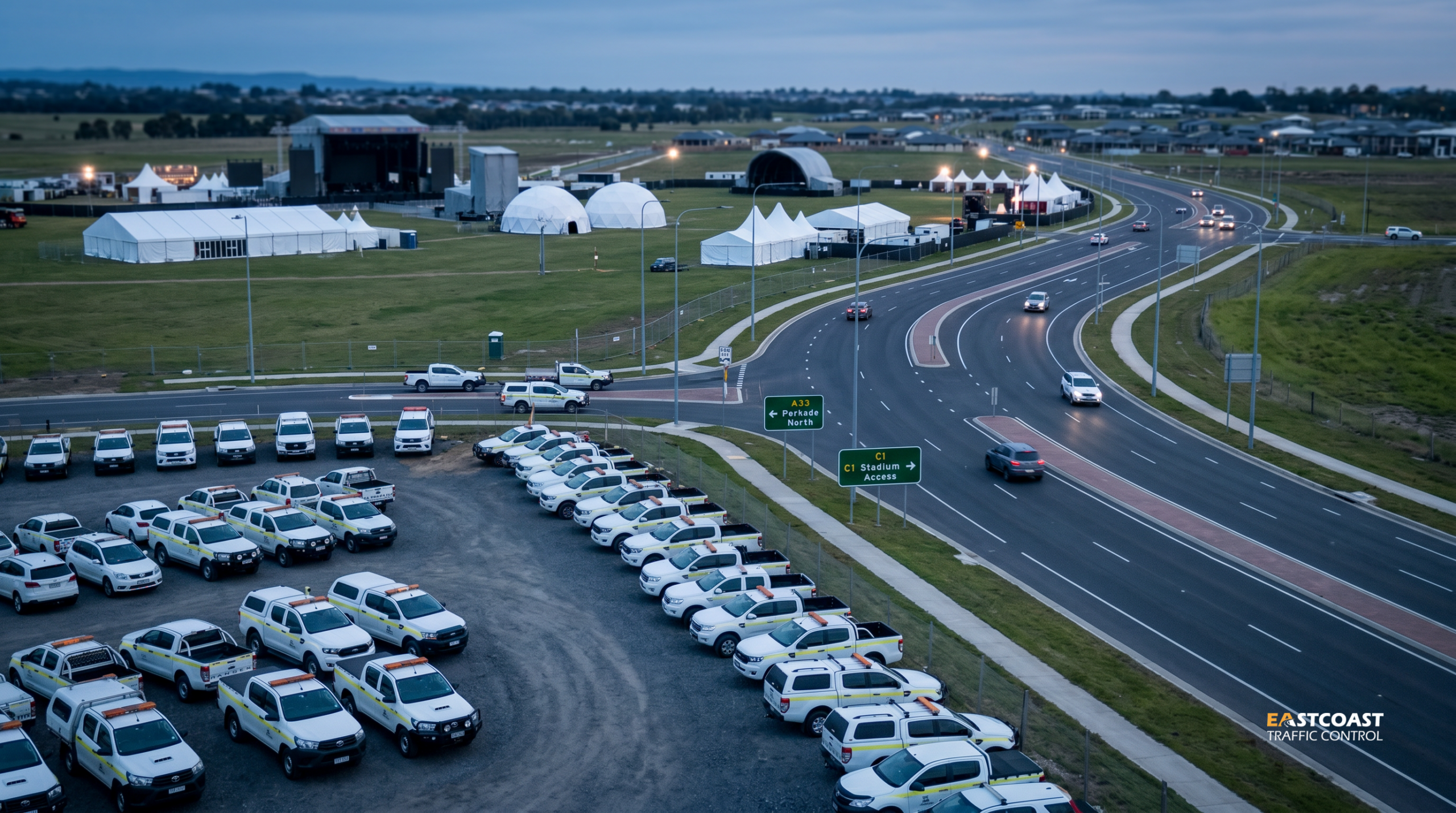
Larger events introduce more complexity. Coordinated road closures. Multiple TGS layouts for different event phases. Traffic Management Implementers who can set out and supervise the Traffic Guidance Scheme on the ground. Potentially Truck-Mounted Attenuator vehicles for any work adjacent to high-speed corridors. The TMP for a major event might run to dozens of pages and require sign-off from TMR or Transport for NSW before a single sign goes up.
The tier structure matters. Traffic Controllers direct traffic at intersections and access points. Traffic Management Implementers hold a higher accreditation and are responsible for setting out the TGS and supervising the broader traffic control operation. For complex events, you need both, and you need a Traffic Management Designer to prepare the plan itself.
Trying to run a large event with under-resourced traffic management is a public safety risk.
How ECTC Supports Event Organisers
East Coast Traffic Control has been delivering event traffic management across Queensland and New South Wales since 1993. Our in-house Traffic Management Designers prepare TMPs and TGSs tailored to your event’s scale, site, and jurisdiction. Our accredited Traffic Controllers and Traffic Management Implementers are deployed from depots across the region, including Cairns, Townsville, Mackay, Rockhampton, Gladstone, Hervey Bay, Maroochydore, the Gold Coast, Coffs Harbour, and Young.
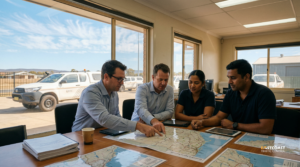
We work with event organisers from the planning stage, not just the day before gates open. Your TMP is built around your actual site, your council’s requirements, and the specific conditions of your event, not a generic template pulled off a shelf.
If you’re planning an event in QLD or NSW and you’re not sure where your traffic management sits, talk to our team early. The further out you engage us, the more options you have.
Contact East Coast Traffic Control on 1300 011 203 or email sales@ectc.com.au to discuss your event traffic management plan.