After a cyclone tears through North or Central Queensland, the roads don’t wait for a recovery plan. Fallen trees block highways. Floodwater undermines road shoulders. Powerlines drape across intersections, and debris turns familiar routes into hazards that can injure or kill. Post-cyclone traffic control Queensland isn’t optional. It’s the first layer of safety that makes every other recovery effort possible.
Why Traffic Control Comes First in the Emergency Phase
Before a utility crew can restore power, before a council loader can clear a road, and before an insurance assessor can reach a damaged property, someone has to make that route safe to travel. That’s where accredited traffic controllers come in.
In the immediate aftermath of a cyclone, roads can be open in one direction and impassable fifty metres further along. Conditions change by the hour. A road that was passable at 6am may be cut by a rising creek by midday. Traffic controllers manage those choke points in real time. They direct emergency vehicles through, hold civilian traffic back, and communicate with site supervisors and road authorities as conditions shift.
Transport and Main Roads (TMR) coordinates road closures and reopening decisions across Queensland’s state-controlled road network. Local councils manage their own networks. In a major event, both are operating simultaneously, and traffic control crews need to work within both frameworks, following MUTCD Part 3, Works on Roads requirements even in emergency conditions. The standard doesn’t get suspended because there’s been a cyclone.
What the Work Actually Looks Like on the Ground
Post-cyclone traffic control isn’t standard roadworks. There’s no neat Traffic Guidance Scheme set up in advance. Crews respond to conditions that weren’t there an hour ago.
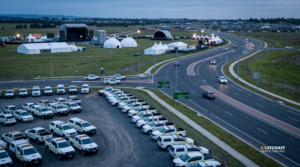
A typical deployment might involve a Traffic Controller (TC) holding traffic at a single-lane section where debris has narrowed the carriageway. A TMI, a Traffic Management Implementer, coordinates the broader site and adjusts the Traffic Guidance Scheme as clearing crews work through the zone. If the site is on a high-speed corridor, a Truck-Mounted Attenuator (TMA) provides a physical buffer between the work crew and moving traffic. That’s not optional. It’s non-negotiable.
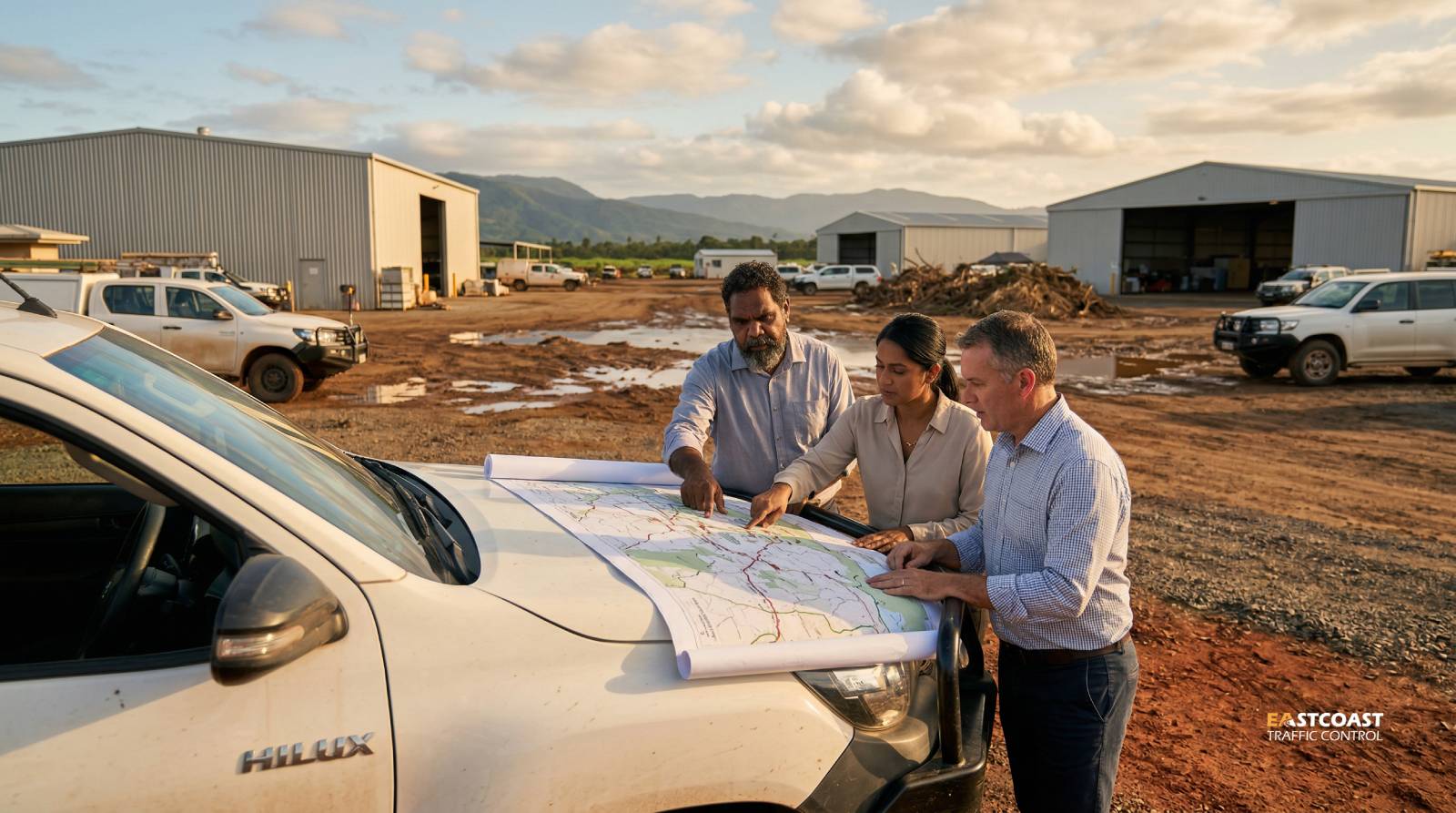
In Far North Queensland, the distances involved add another layer of complexity. Crews out of our Cairns and Townsville depots regularly cover routes where the nearest backup is an hour away. Self-sufficiency matters. Controllers need to know first aid requirements, communication protocols, and site-specific hazards before they arrive.
The Mackay region is another area where cyclone response has been a recurring reality. Our Mackay depot teams have worked through multiple weather events, and that experience shapes how we pre-position resources when a system is forecast to cross the coast. We don’t wait for the all-clear to start planning.
The Coordination Challenge Nobody Talks About
Recovery operations attract a lot of traffic. Contractors, emergency services, utility crews, council workers, media, and residents trying to reach their properties are all moving through the same damaged network at the same time. Managing that mix is genuinely difficult.
The instinct of many drivers after a cyclone is to self-assess. They look at a road, decide it looks passable, and drive onto it. That’s how vehicles end up bogged in hidden floodwater. That’s how a driver hits debris that’s been pushed to the edge of the lane but not removed. Traffic controllers are the visible, authoritative presence that stops that behaviour. A stop/slow bat and a hi-vis vest carry weight. People stop.
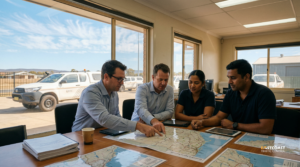
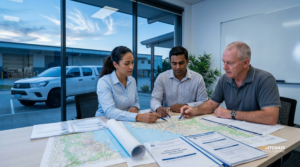
Good post-cyclone traffic control means constant communication up the chain. If a road authority has marked a route as open but a crew on the ground can see it’s deteriorating, that information needs to reach TMR or the relevant council immediately. Our TMIs are trained to manage that loop. They’re not just watching the vehicles in front of them.
There’s also the fatigue factor. Recovery operations run long hours, often across night shifts and weekends. Under the Building and Construction General On-site Award, penalty rates apply for those conditions, and they apply for good reason. Fatigued controllers make mistakes. Rostering that accounts for shift length and recovery time is a safety issue.
Working with ECTC After a Weather Event
East Coast Traffic Control has been operating since 1993. We’ve supported recovery efforts across Queensland and New South Wales through more than three decades of weather events, infrastructure projects, and emergency response work.
Our depots in Cairns, Townsville, and Mackay mean we have crews already positioned in the regions most exposed to cyclone activity. We’re not flying teams in from the south and hoping they know the roads. Our people live and work in these communities. They know the local network. They know the local contacts. They know the conditions specific to Far North and Central Queensland.
We hold ISO certification across quality, safety, and environmental management, and our crews carry the appropriate TCAS accreditation for the work they’re performing. TCs for ground-level traffic direction, TMIs for setting out and supervising Traffic Guidance Schemes, and TMA-accredited operators for high-speed corridor work.
If you’re a principal contractor, a council, or a road authority coordinating recovery works after a weather event, establish a traffic control relationship before the season starts. Crews get committed quickly when a major system hits.
Call us on 1300 011 203 or email sales@ectc.com.au to talk through your cyclone response requirements. We’re ready when you need us.